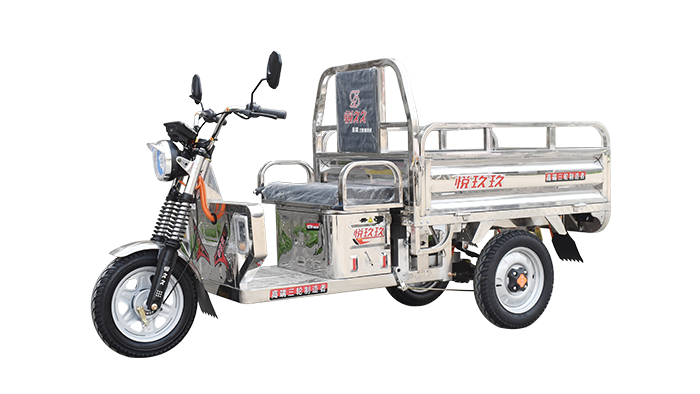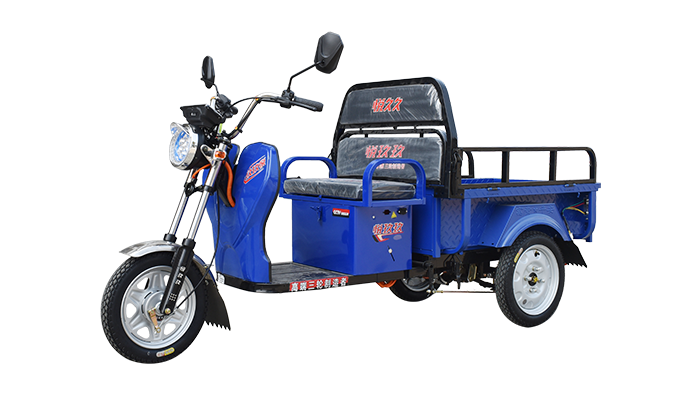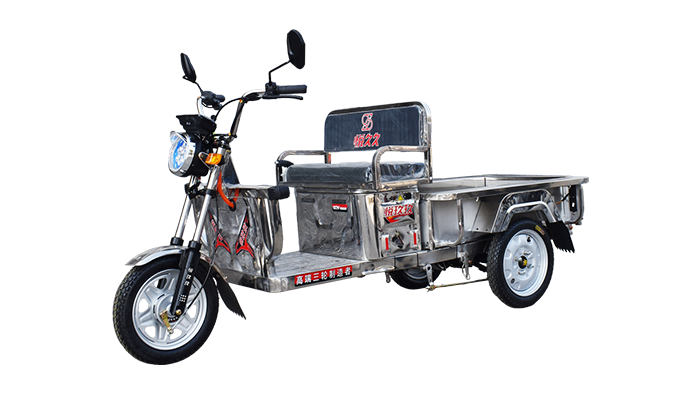
Stainless Steel TricyclesInventor


+86 133 9251 2305
+86 133 9251 2305
Hot search keywords: Sanitation Tricyclesmanufacturer Stainless Steel Tricycles Custom Stainless Steel TricyclesPrice
Thanks to their corrosion resistance and durability, Stainless Steel Electric Tricycles are widely used in commercial transport and everyday personal transport. But whether a model is truly "qualified" has to be judged across multiple dimensions. These criteria concern user safety as well as vehicle life and performance, and they fall into four core categories: material, safety, performance and compliance.
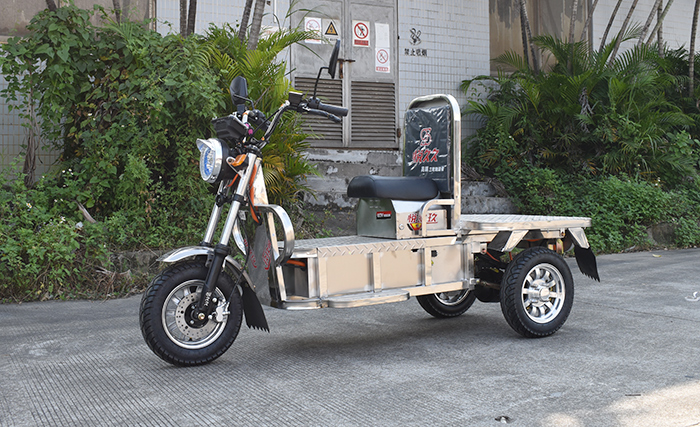
Material Standards: The Core Threshold for Stainless Steel Models
The frame is the load-bearing core and must use stainless steel that meets industry norms. 304 stainless steel, with its higher nickel content, offers better corrosion resistance and toughness and is the preferred choice for commercial and high-frequency use. Even where 201 stainless steel is used, material purity must be assured, since excessive impurities make the frame prone to rust and leave strength inadequate. Plate thickness must also match the vehicle's load rating: generally no less than 1.2 mm for household and personal transport models, and 1.5 mm or more for commercial load-carrying models. Welds must be free of missed or incomplete welds and show no obvious weld marks after polishing, preventing corrosion from spreading from the seams.
Safety Standards: The Baseline Requirement for Any Qualified Vehicle
The braking system must respond quickly and consistently. Household models fitted with drum brakes should stop within 5 metres when unladen, while commercial models are recommended to use disc brakes to ensure effective braking under load. Frame strength must pass a static pressure test with no visible deformation at 1.2 times the rated load. The electrical system also needs short-circuit and leakage protection, the battery compartment should be insulated, and the charging port should have anti-miscontact protection to avoid electrical hazards.
Performance Standards: Shaping the Riding Experience
Motor power must match the load requirement: 500W or above is enough for everyday personal transport, while commercial models carrying over 100 kg need 800W or more. Battery capacity should deliver a sensible range—lead-acid batteries must meet the national standard with a range of no less than 50 km, and lithium batteries must include overcharge protection. The suspension system should filter out road bumps, and the steering must be free of sticking to ensure stable handling.
Compliance Standards: The Precondition for Legal Road Use
The vehicle must conform to national safety standards for electric tricycles and hold the relevant qualifications such as a production licence and 3C certification, with clear body markings. Some regions also impose registration requirements, so dimensions, weight and other parameters must fall within the compliant range.
Only by meeting all four categories—material, safety, performance and compliance—can a Stainless Steel Electric Tricycle be called "qualified" and offer users a safe, long-lasting experience.
【Article Tags】 Stainless
【ResponsibilityEdit】
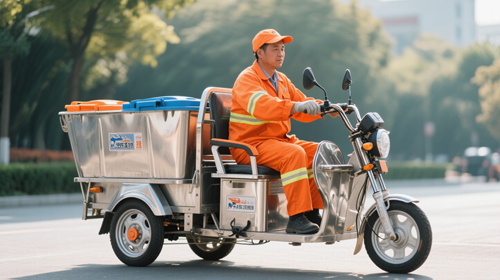
Product:1.5mAll-steelStainless SteelSanitation TricycleApplication:CitySanitationCleaningBack Streets of Yangchun County, Yangjiang, Guangdong... 【Details+】
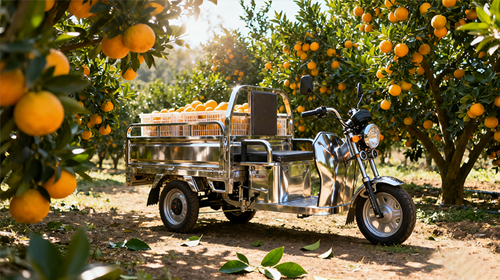
Product:1.8mLoad Capacity KingStainless Steel Electric TricyclesApplication:FruitTransportationDatangbu, Xinfeng County, Ganzhou, Jiangxi... 【Details+】
 0750-6333776+86 133 9251 2305
All Rights Reserved © 2025 Jiangmen Jiuxin New Energy Technology Co., Ltd.Record No..:粤ICP备2025465897号 Sitemap

 WeChat Official Account
 Follow Douyin
 Follow Kuaishou
 Follow WeChat Channels
 Follow Xiaohongshu